Balance on set: negotiation and synergy between the art, camera and directing departments
On any professional film or video production, the set is not just a place to create but a space of constant negotiation. Each department arrives with its own vision, needs and stopwatch, but the success of the work depends on one thing: the ability of all the pieces to fit together in harmony.
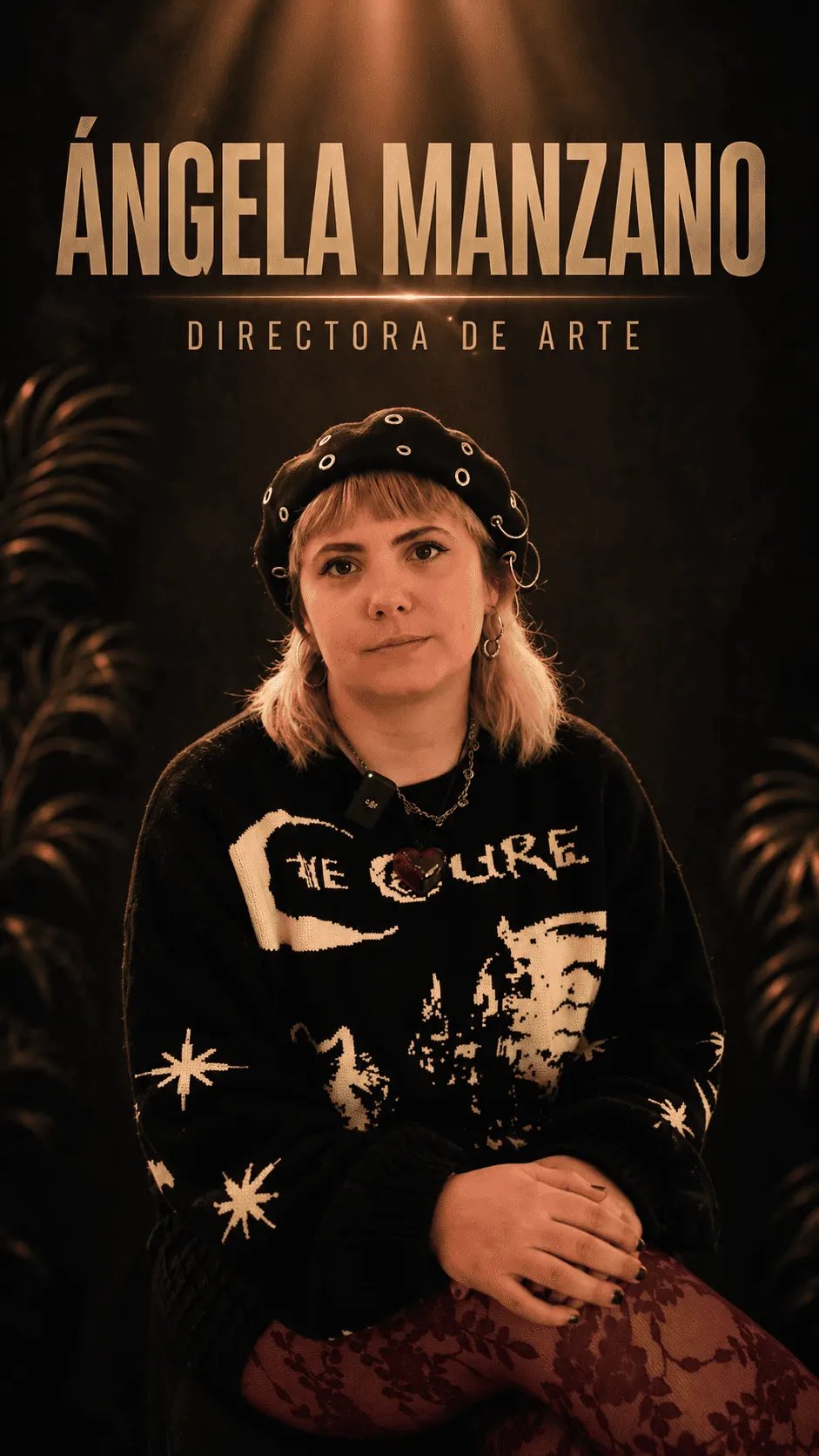
Today we explore those creative and logistical frictions with art director Ángela Manzano. As an expert in bringing stories to life visually, Ángela breaks down the three most common «conflicts» and how to resolve them so the production doesn’t grind to a halt.
1. Art vs camera: the battle over colour
This is one of the classic clashes on any shoot. The art team designs a specific colour palette for the set or props, but the moment the camera team switches on the lights, everything changes.
A wall colour that seemed perfect can be completely transformed under a cold light or a particular gel.
The solution: as Ángela points out, both departments are working towards the same goal: the look of the project. When egos are set aside, consensus comes quickly. If the final result on the monitor is what the story needs, the «colour war» becomes a high-level technical collaboration.
2. Time: the art department’s calm vs the urgency of directing and production
Time is the most expensive resource on a shoot, and this is where methods collide.
The art department needs its processes, drying times, attention to detail and care so the set is believable and works. Meanwhile, directing and production usually work with one eye on the clock, pushing for the camera to roll as soon as possible.
The balance: the key is planning ahead. Understanding that a well-prepared set saves hours of post-production and continuity problems is essential for production to respect the art department’s timings.
3. Creativity vs reality: the budget challenge
It is the industry’s eternal dilemma. Creative requests sometimes exceed the production’s financial reality.
The art department wants to raise the visual bar, but resources are finite.
The solution: this is where ingenuity and professionalism come in. A good art director knows how to make the most of resources and suggest alternatives that keep the visual impact while fitting the numbers. It is about turning a limitation into an opportunity to innovate.
At Alicante Light Film, we believe a shoot is a choreography where nobody should tread on anyone else’s toes. As Ángela Manzano reminds us, in the end the key is not who is right or who imposes their view, but how everyone’s efforts are coordinated so the story shines on screen.